Two Injections a Year Instead of a Daily Pill: New HIV Prevention Study Shows Striking Results
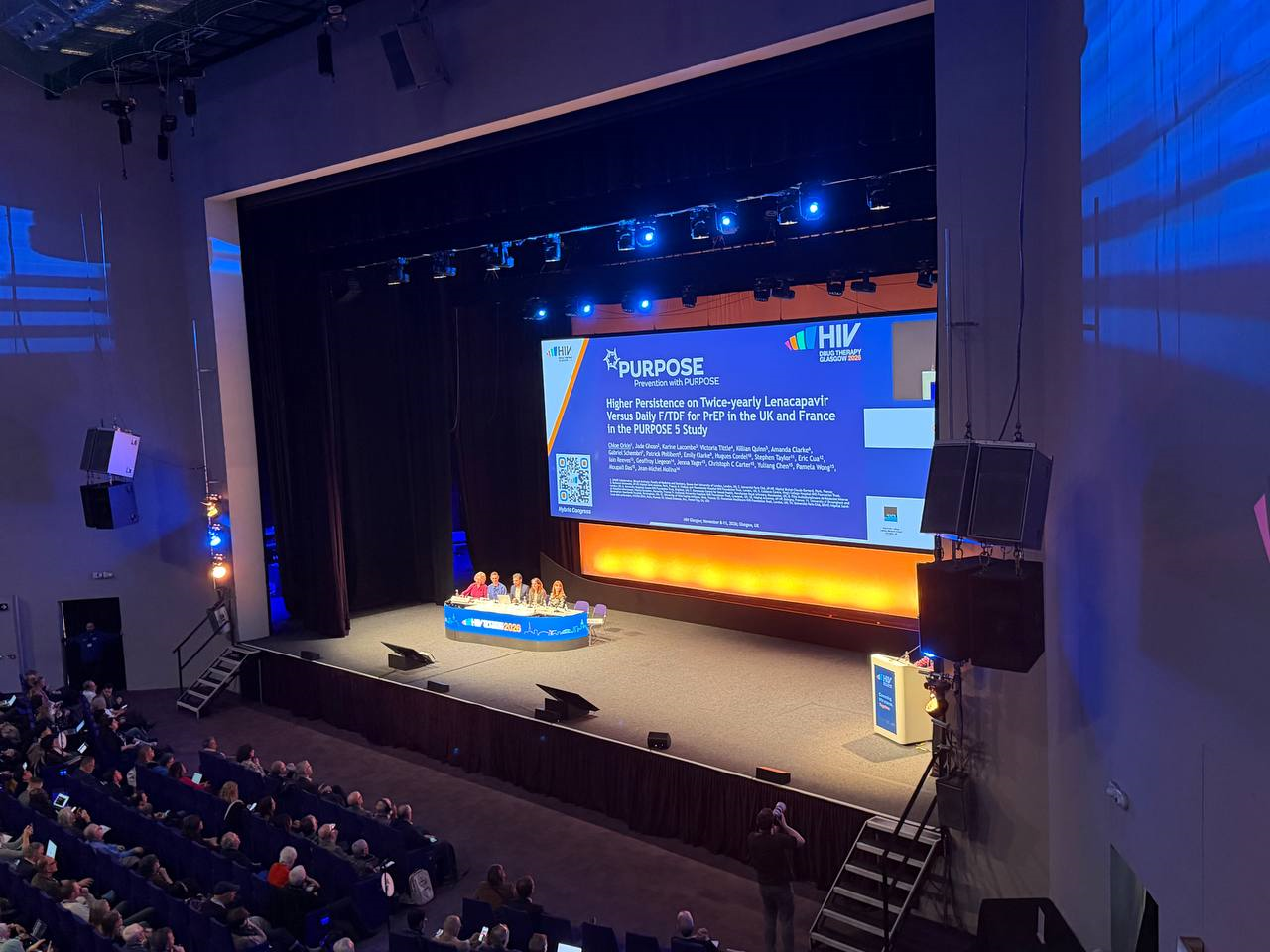
The PURPOSE 5 study, presented at HIV Drug Therapy Glasgow 2026, found substantially higher persistence with twice-yearly lenacapavir injections than with daily oral PrEP. But questions about the limited representation of women highlighted a broader challenge: scientific innovation alone cannot overcome inequalities in access to HIV prevention.
GLASGOW, November 2026 — An HIV prevention method requiring just two injections a year could change how people protect themselves against the virus.
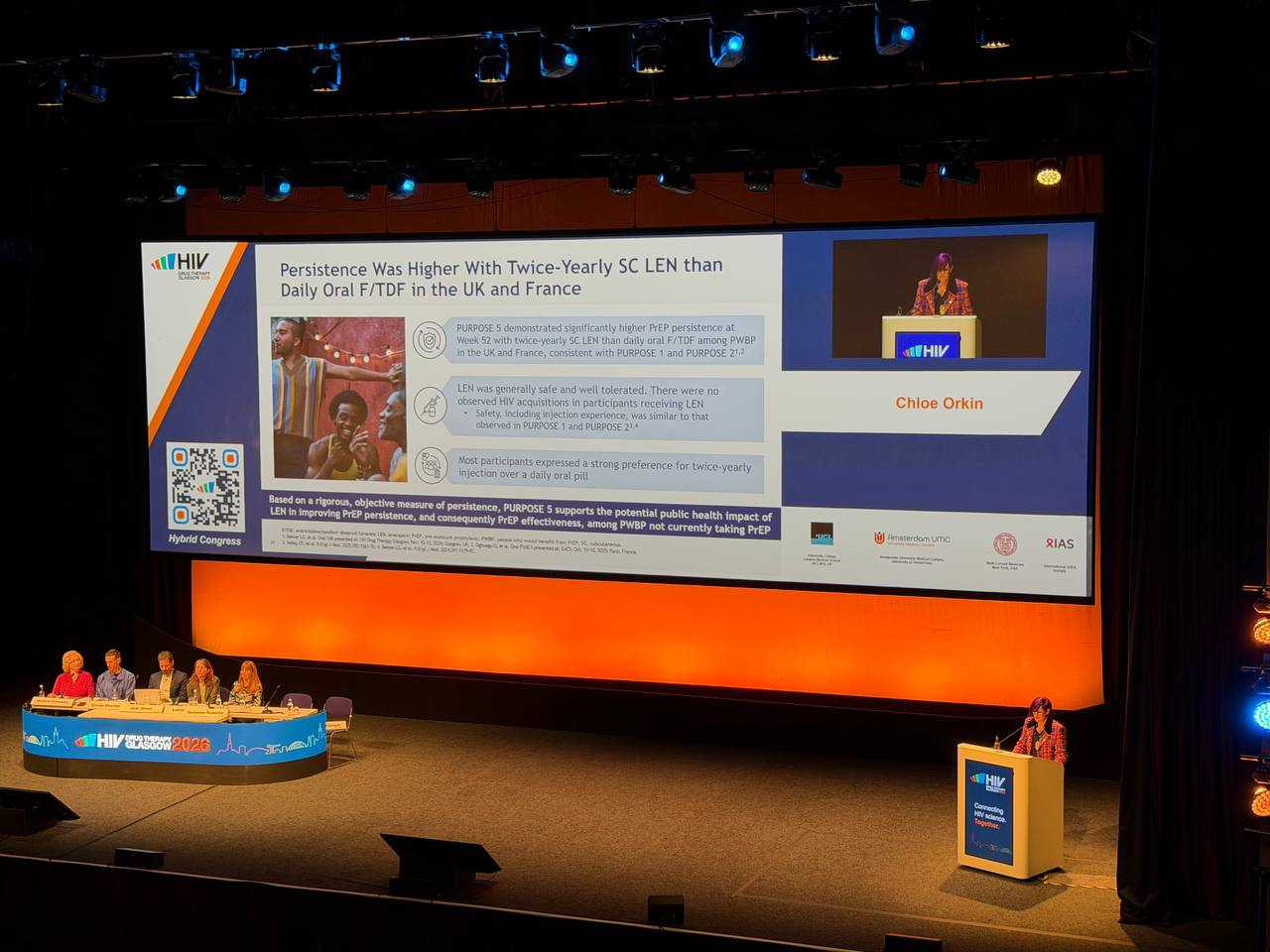
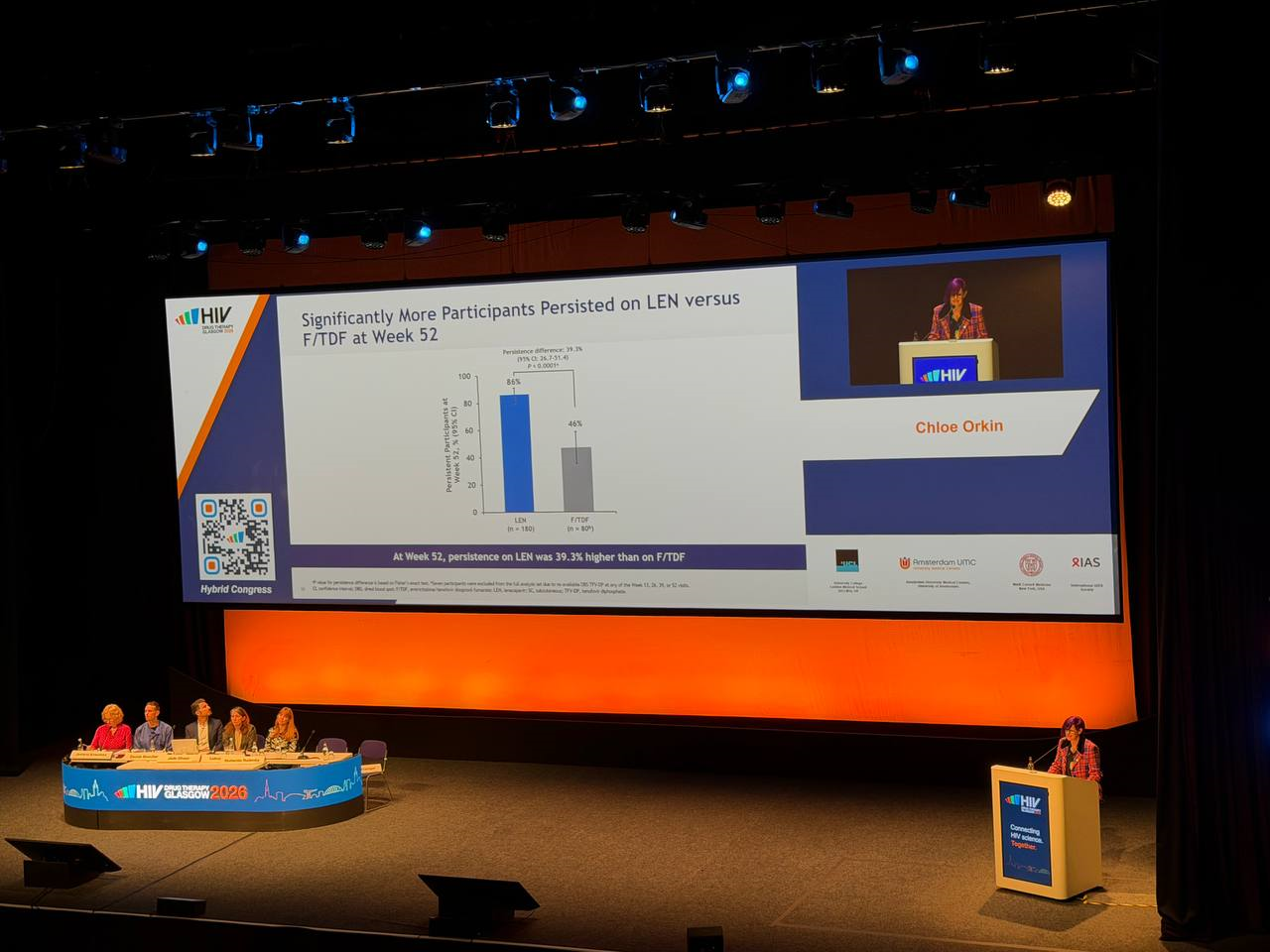
New findings from the PURPOSE 5 study, presented by Professor Chloe Orkin at HIV Drug Therapy Glasgow 2026, revealed a substantial difference between long-acting injectable PrEP and a daily oral prevention regimen.
After one year, 86 percent of participants receiving lenacapavir injections remained persistent with their prescribed prevention regimen, compared with just 46 percent of those receiving daily oral PrEP.
The results highlight the potential of long-acting HIV prevention to address one of the most persistent challenges in preventive medicine: maintaining consistent protection over time.
Yet the discussion following the presentation raised another question. What happens to people who never reach a PrEP clinic in the first place?
A Different Approach to HIV Prevention
Pre-exposure prophylaxis, commonly known as PrEP, is one of the most effective tools available to prevent HIV infection.
Daily oral PrEP provides highly effective protection when taken as prescribed. But maintaining a daily medication routine can be challenging.
Missed doses, changes in personal circumstances, stigma and difficulties accessing healthcare can all affect whether people continue using PrEP consistently.
Lenacapavir offers a different approach.
Administered as a subcutaneous injection every six months, the long-acting antiretroviral drug removes the need for daily pill-taking.
Previous clinical trials, PURPOSE 1 and PURPOSE 2, demonstrated high efficacy for lenacapavir in preventing HIV acquisition.
PURPOSE 5 was designed to examine a different but equally important question: Would people remain on a twice-yearly injectable prevention regimen more consistently than on a daily oral medication?
A Study Across France and the United Kingdom
PURPOSE 5 was a randomized, open-label Phase 2 study conducted in France and the United Kingdom.
A total of 267 participants received at least one dose of their assigned PrEP regimen.
All participants met established eligibility criteria for PrEP and had not been using PrEP for at least four weeks before enrollment.
Of these, 180 received twice-yearly subcutaneous lenacapavir, while 87 were assigned to daily oral emtricitabine/tenofovir disoproxil fumarate, commonly known as F/TDF.
The median age was 34 years, and approximately 38 percent had never previously used PrEP.
The study’s primary endpoint was persistence over 52 weeks, defined as sustained adherence to the assigned PrEP regimen and required follow-up visits.
Importantly, persistence was assessed using objective measures rather than relying solely on participants’ self-reported medication use.
For oral PrEP, researchers measured drug concentrations in dried blood spots to assess adherence.
For lenacapavir, they evaluated whether participants received their scheduled injections and attended follow-up visits within the required time windows.
86 Percent Versus 46 Percent
The primary results strongly favored lenacapavir.
At Week 52, 154 of 180 participants receiving lenacapavir met the study’s persistence criteria, representing 86 percent.
In the evaluable daily oral PrEP group, 37 of 80 participants, or 46 percent, remained persistent.
The absolute difference was 39.3 percentage points and was highly statistically significant.
In practical terms, a substantially greater proportion of people receiving twice-yearly injections maintained their prescribed prevention regimen throughout the year.
Interestingly, premature treatment or study discontinuation rates were similar between the two groups.
The main difference was adherence while participants remained in the study.
Among those receiving daily oral PrEP, inadequate medication adherence was considerably more common.
These findings suggest that reducing the frequency of medication administration may help overcome a major barrier to sustained HIV prevention.
No HIV Acquisitions in the Lenacapavir Group
The study also examined HIV acquisition as an exploratory outcome.
No HIV infections were reported among the 180 participants receiving lenacapavir.
One HIV infection occurred in the daily oral PrEP group.
Drug concentration measurements in that participant indicated low adherence, consistent with fewer than two doses per week on average.
However, PURPOSE 5 was primarily designed to evaluate persistence, not to establish a statistically definitive difference in HIV prevention efficacy between the two regimens.
With only one HIV acquisition across both groups, the findings cannot independently establish comparative efficacy.
Nevertheless, the absence of HIV acquisitions in the lenacapavir group was consistent with the favorable efficacy findings previously reported in PURPOSE 1 and PURPOSE 2.
Safety and Patient Preference
Lenacapavir was generally well tolerated, with no new safety concerns identified.
Injection-site reactions were common, occurring in 94 percent of participants receiving lenacapavir.
Most were mild or moderate, and no severe injection-site reactions were reported.
The study also explored participants’ preferences between injectable and oral PrEP.
Among those receiving lenacapavir, the proportion expressing a strong preference for twice-yearly injections increased from 60 percent at baseline to 77 percent at Week 26.
This suggests that experience with the injectable regimen may reinforce its acceptability.
For people who find daily medication challenging or inconvenient, a twice-yearly option could provide greater flexibility and a simpler prevention routine.
Why Were So Few Women Included?
One of the most important questions raised during the discussion concerned the relatively small number of women participating in the study.
Of the 267 participants, 19 were cisgender women, representing 7 percent of the overall study population.
A further 26 participants, or 10 percent, were transgender women.
Responding to the question, Orkin explained that cisgender women accounted for 14 percent of new PrEP users in the study, compared with 7 percent of the overall population.
The proportion of transgender women remained approximately 10 percent, with little change among new users.
But Orkin emphasized that the underlying reasons for women’s limited representation extend beyond the type of PrEP being offered.
One of the most important barriers, she explained, is whether individuals recognize themselves as potential candidates for HIV prevention.
Even a highly effective long-acting injectable cannot automatically overcome the earlier steps involved in recognizing HIV risk and seeking preventive care.
Another critical issue is where PrEP is delivered.
The Problem Is Not Just the Medication — It Is Access
Orkin highlighted how PrEP services in the United Kingdom have historically developed around the needs of men who have sex with men.
Many sexual health services were shaped by the epidemiology of the early HIV epidemic and the populations most affected at that time.
However, these settings may not be the preferred places for women to seek preventive care.
According to Orkin, women have expressed a preference for accessing PrEP through community-based services, pharmacies and women’s health hubs.
PURPOSE 5 did not test alternative models of PrEP delivery.
It was a clinical study conducted within established healthcare settings in France and the United Kingdom.
As a result, the study could demonstrate the benefits of a new prevention option among people who had already entered the healthcare system.
It could not establish how best to reach those who remain outside existing PrEP services.
Orkin also placed the findings in a broader European context.
She noted that cisgender women account for approximately 2 percent of PrEP users in Europe, whereas they represented 14 percent of new PrEP users in PURPOSE 5.
That represents a sevenfold difference, although the figures describe different populations and should not be interpreted as directly comparable measures of uptake.
The findings nevertheless suggest that there is considerable scope to improve women’s engagement with HIV prevention.
The Next Challenge for HIV Prevention
PURPOSE 5 provides compelling evidence that twice-yearly lenacapavir injections can substantially improve persistence compared with daily oral PrEP.
The findings reinforce an important principle: the effectiveness of HIV prevention in everyday life depends not only on how well a medicine works, but also on whether people can use it consistently.
Long-acting options could make prevention more manageable for people who struggle with daily medication or prefer a less frequent dosing schedule.
But the discussion in Glasgow highlighted the limitations of relying on pharmaceutical innovation alone.
Women and other underserved populations must first be reached, informed and supported in recognizing PrEP as a relevant option for their own health.
Future progress will therefore require more than new medicines.
It will also depend on rethinking how and where HIV prevention is delivered, expanding access beyond traditional sexual health clinics and designing services around the needs of diverse communities.
The next major advance in HIV prevention may not be another breakthrough in drug development.
It may be ensuring that the breakthroughs already available reach everyone who could benefit from them.