Simplifying the Complex: Switching to BIC/LEN in Treatment-Experienced People with HIV
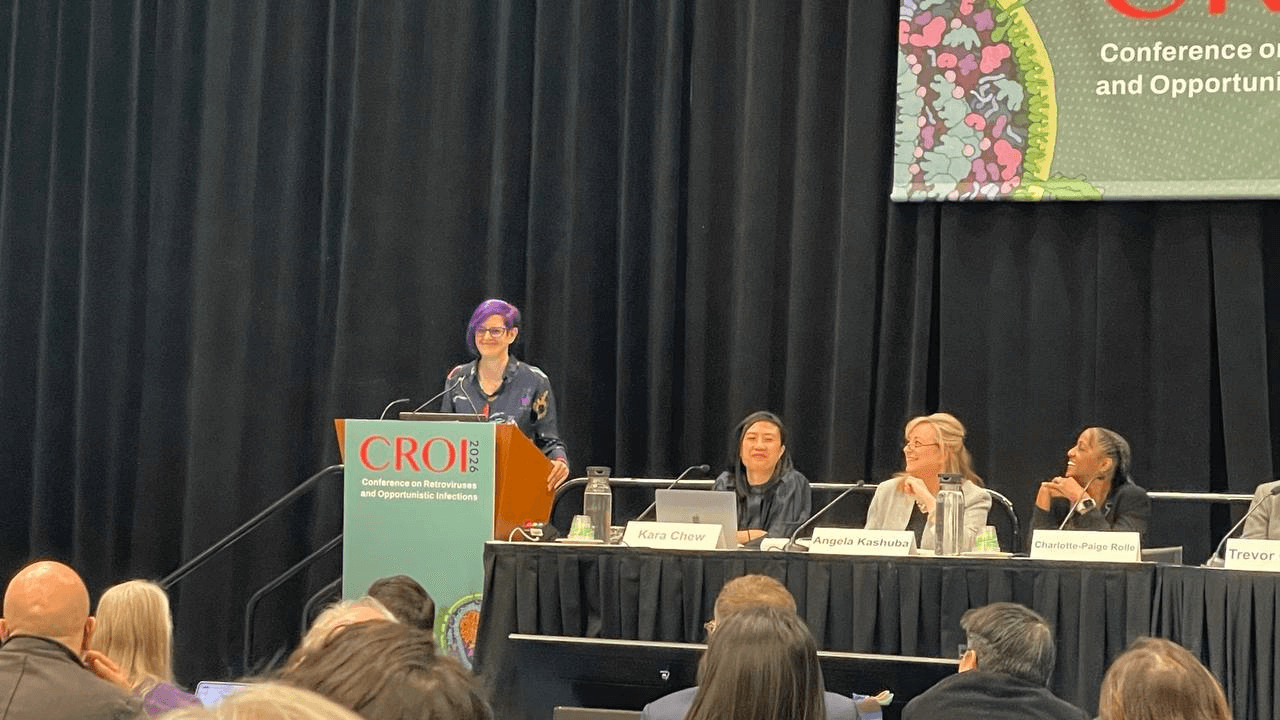
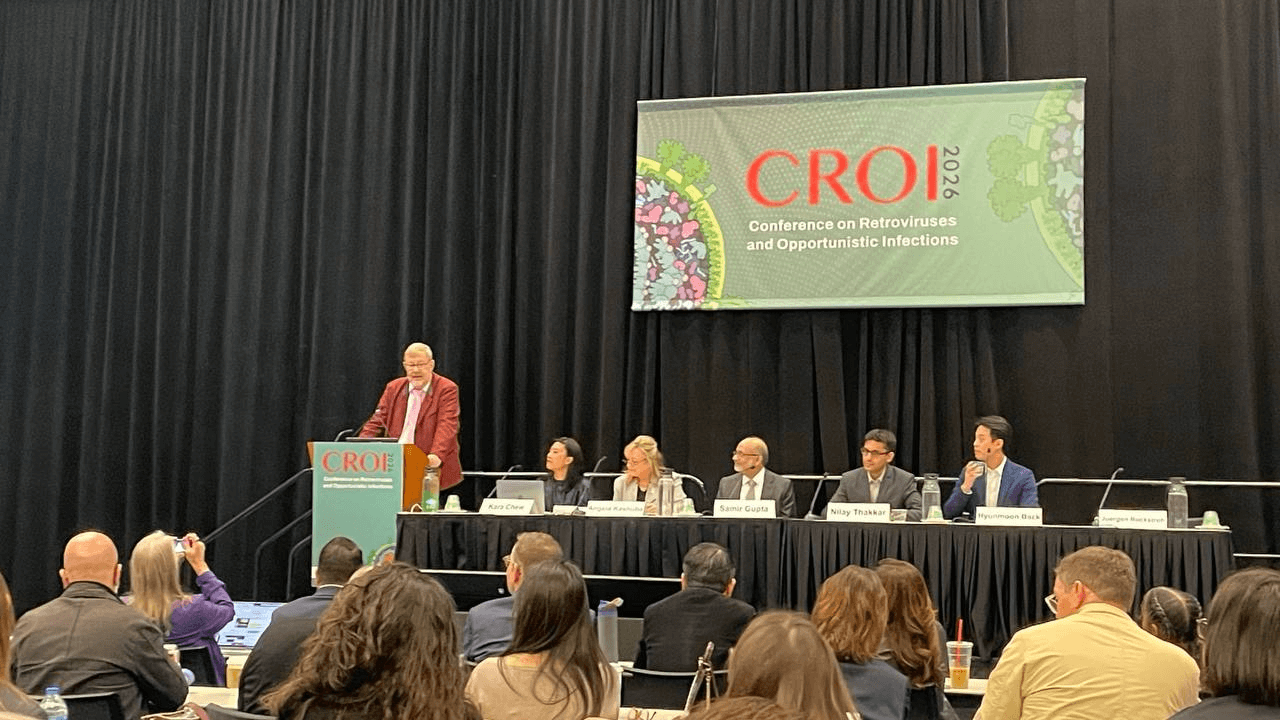
At CROI 2026, among presentations focused on prevention strategies and new antiviral approaches, one oral session addressed a different — and very practical — question in HIV care: what about people who are already virologically suppressed but remain on complex, multi-tablet regimens?
In the Phase 3 ARTISTRY-1 study, presented by Professor Chloe Orkin, investigators evaluated the efficacy and safety of switching from complex antiretroviral regimens to a once-daily single-tablet combination of bictegravir and lenacapavir (BIC/LEN).
The study did not aim to demonstrate superiority. It aimed to answer something more fundamental: can treatment be simplified without losing control?
A Population Often Overlooked
The ARTISTRY-1 population reflects a group that is frequently underrepresented in modern registrational trials.
Participants had been living with HIV for a median of 28 years. More than 76% were aged 55 or older. Over 80% had a documented history of antiretroviral resistance. Many were taking three or more pills per day, and 39% required twice-daily dosing.
Complex regimens were defined broadly and included boosted protease inhibitor combinations, regimens with multiple third agents, parenteral agents in combination with oral therapy, or dosing schedules more frequent than once daily.
Comorbidity burden was substantial:
- Dyslipidemia in 68%
- Hypertension in 50%
- Diabetes or hyperglycemia in 24%
- Chronic kidney disease in 14%
- More than half had two or more comorbid conditions
- Nearly 61% were taking at least two concomitant non-HIV medications
This is not a marginal population. It represents long-term survivors with accumulated treatment history, resistance, and age-related health complexity.
Many current single-tablet regimens are not options for them due to historical resistance, intolerance, contraindications, or drug–drug interactions.
Study Design and Primary Outcome
ARTISTRY-1 was a randomized, open-label, multicenter Phase 2/3 trial. Adults with HIV-1 RNA <50 copies/mL on stable complex regimens for at least six months were randomized 2:1 to switch to BIC/LEN or to continue their baseline regimen.
The primary endpoint at Week 48 was the proportion of participants with HIV-1 RNA ≥50 copies/mL (FDA Snapshot algorithm), with a noninferiority margin of 4%.
At Week 48:
- 0.8% of participants in the BIC/LEN group had HIV-1 RNA ≥50 copies/mL.
- 1.1% in the complex regimen group met this endpoint.
- 96% of those switched to BIC/LEN maintained HIV-1 RNA <50 copies/mL, compared with 93.5% in the control group.
The difference met criteria for noninferiority.
Importantly, no treatment-emergent resistance to bictegravir or lenacapavir was detected through Week 48. The few participants with viral rebound in the BIC/LEN group either resuppressed or had low-level viremia without changing therapy.
CD4 counts remained stable in both groups.
In a population with high rates of historical NRTI, NNRTI, and protease inhibitor resistance — and some prior integrase mutations — maintaining suppression without emergent resistance is clinically significant.
Safety Profile and Metabolic Effects
Adverse events occurred at similar rates in both groups. Any adverse event was reported in 82.2% of participants in the BIC/LEN arm and 84.4% in those continuing complex regimens. Serious adverse events occurred in 14.0% and 11.8%, respectively.
Discontinuations due to adverse events were infrequent:
- 1.6% in the BIC/LEN group
- 0.5% in the complex regimen group
Five deaths occurred in the BIC/LEN arm, none considered related to study treatment.
Notably, fasting lipid parameters improved after switching to BIC/LEN. Total cholesterol, LDL cholesterol, triglycerides, and total cholesterol-to-HDL ratio showed statistically significant reductions compared with continued complex regimens. In a population where nearly two-thirds had dyslipidemia at baseline, these changes may have clinical relevance.
Treatment Satisfaction: A Measurable Difference
Beyond virologic outcomes, ARTISTRY-1 assessed treatment satisfaction using the HIV Treatment Satisfaction Questionnaire.
At baseline, satisfaction scores were similar between groups. After switching to BIC/LEN, treatment satisfaction increased significantly by Week 4 and remained higher through Week 48 (P < 0.0001 at multiple timepoints).
For individuals taking multiple tablets for decades, simplification is not cosmetic. It affects daily routine, adherence confidence, and long-term sustainability.
Why This Study Matters
HIV innovation often focuses on treatment-naïve individuals or long-acting injectable strategies. ARTISTRY-1 addresses a different reality: people who achieved suppression years ago but remain on regimens that are complex because history limited their options.
This is a community that has accumulated resistance patterns, comorbidities, and polypharmacy. They are not failing therapy — but they have been difficult to simplify.
The combination of bictegravir, a high-barrier integrase inhibitor, with lenacapavir, a first-in-class capsid inhibitor with a novel resistance profile, offers a mechanistically distinct approach that enables simplification without compromising efficacy.
The results from ARTISTRY-1 demonstrate that in treatment-experienced, virologically suppressed adults on complex regimens, switching to once-daily BIC/LEN maintains viral suppression, shows no emergent resistance through 48 weeks, is generally well tolerated, improves lipid parameters, and increases treatment satisfaction.
This is not a speculative advance. It is an evidence-based option for a population that has long required individualized, often complicated solutions.
Simplification, in this context, is not about convenience. It is about sustainability for people living with HIV across decades of care.